https://jasonspielman.com/notebooklm
Design Evolution
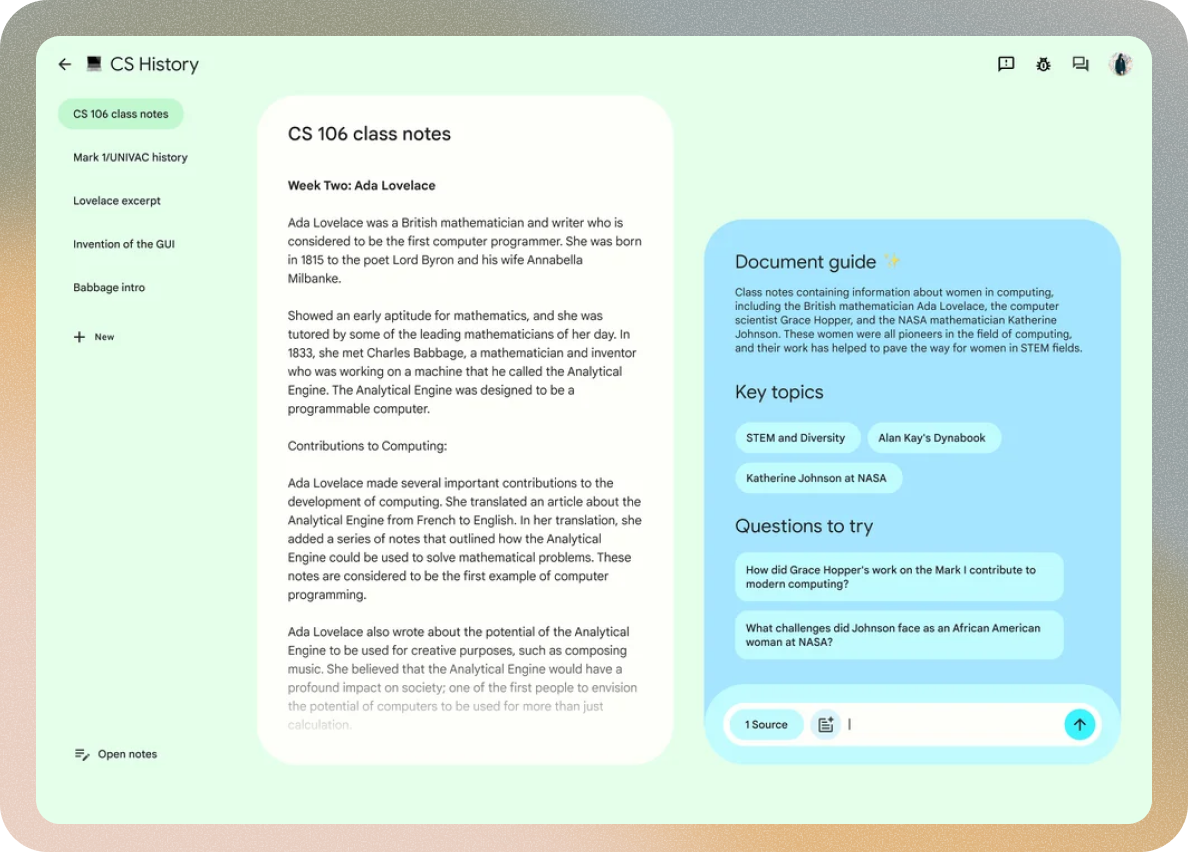
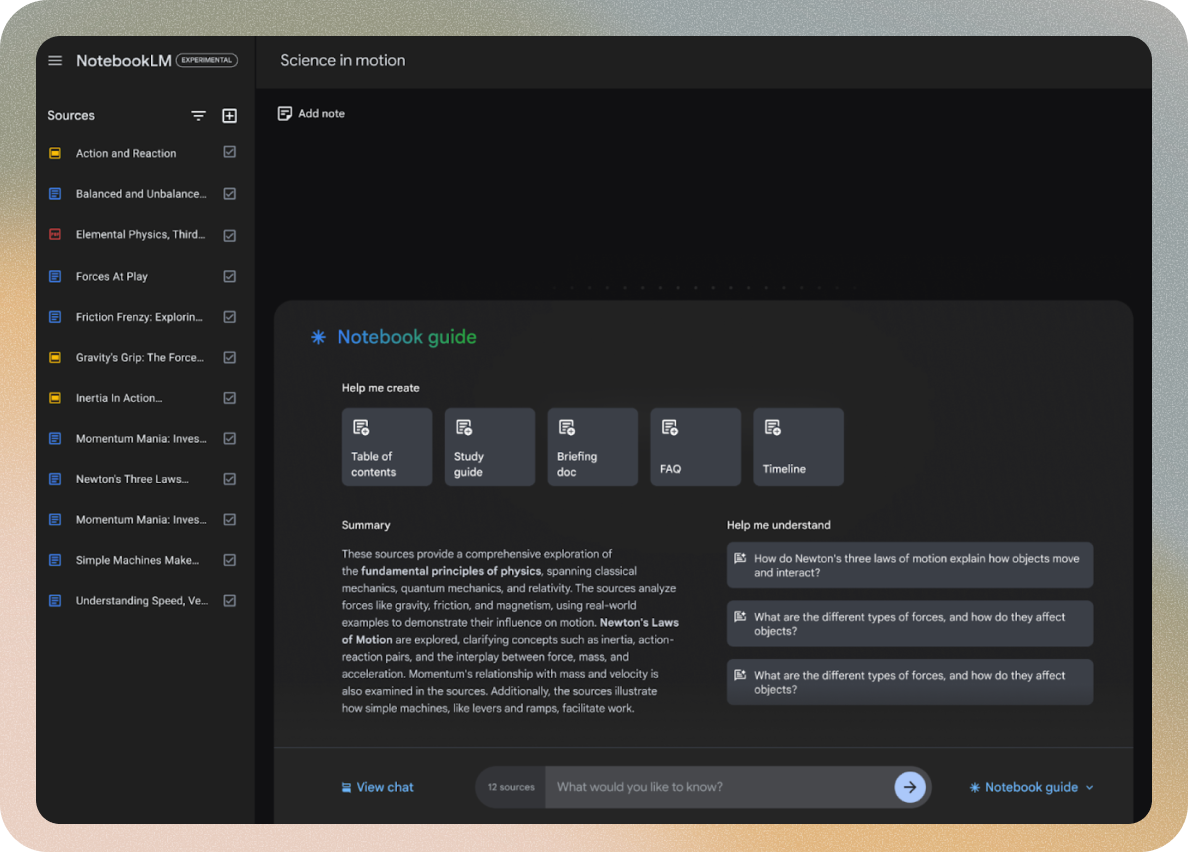
One of the core problems we set out to solve with NotebookLM was “tab overwhelm” the scattered, fractured experience of jumping between tools while trying to synthesize ideas. We wanted to create a space where every part of the creation journey could happen in one place.

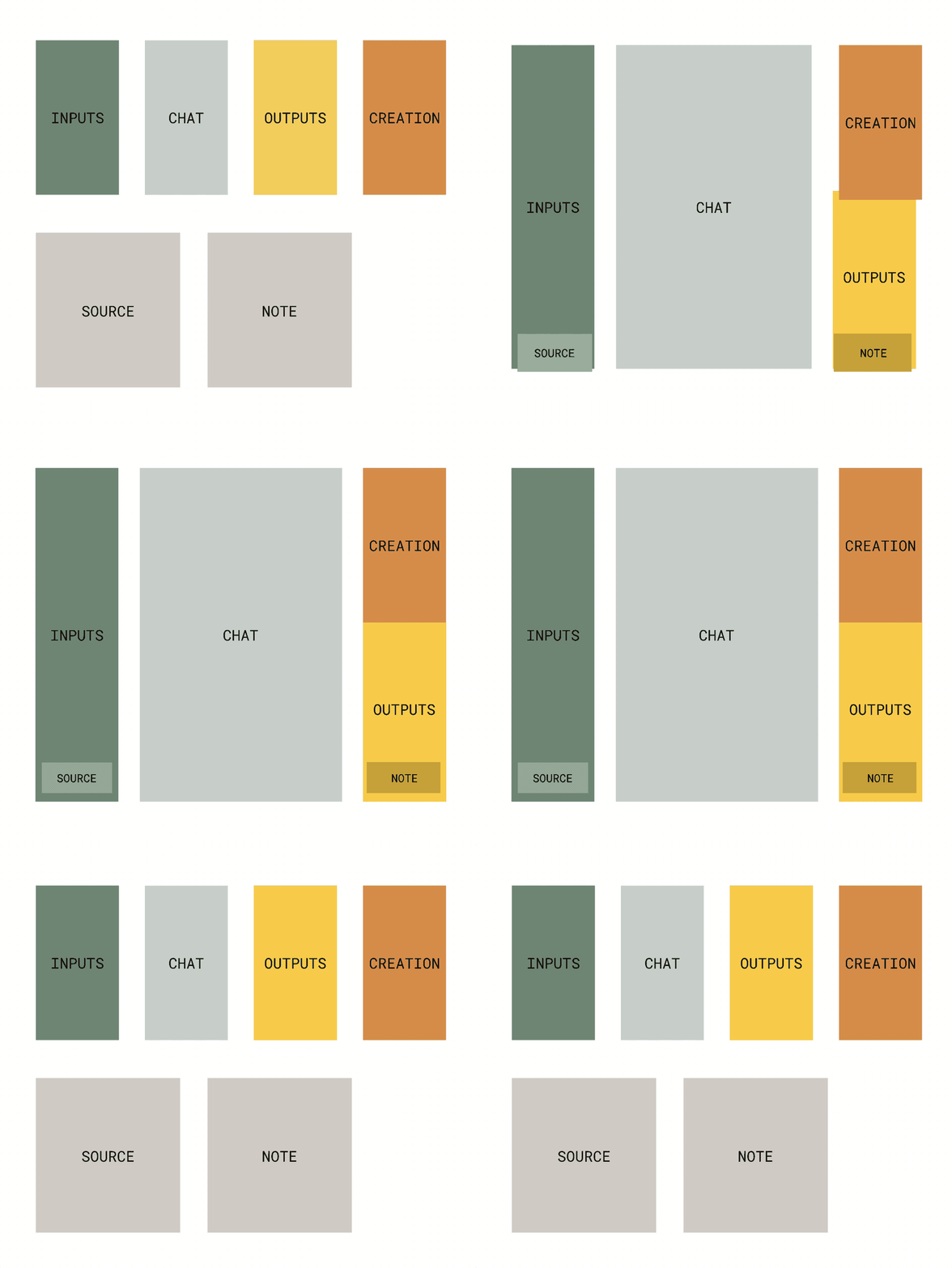
The structure you see now may look obvious but it took what felt like a thousand iterations to get there. I was trying to arrange these blocks in a way that supported a clear mental model and a UI that felt intuitive and digestible.
These sketches were done on a plane. I ran out of paper and ended up sketching the final solution across a few napkins.
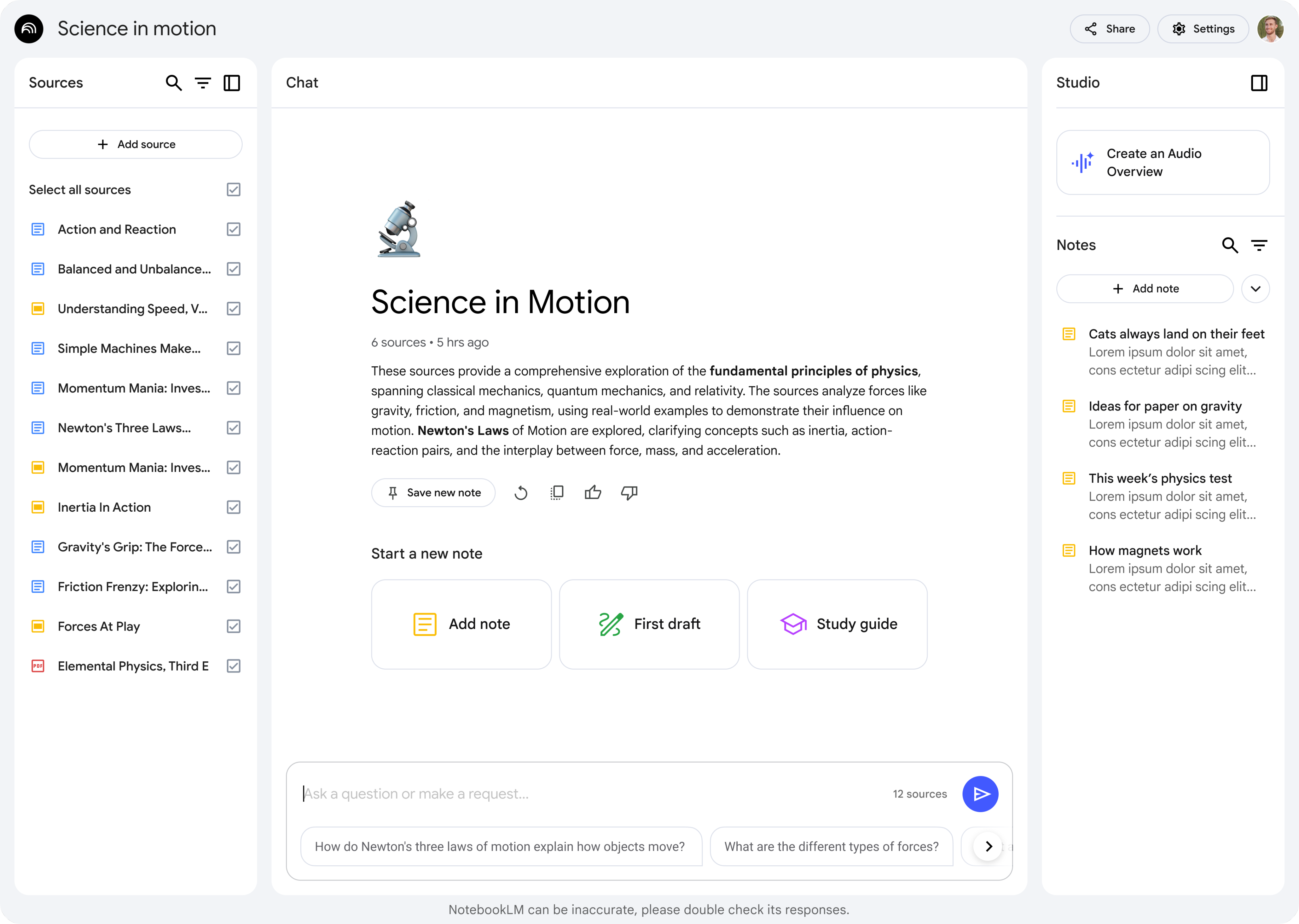
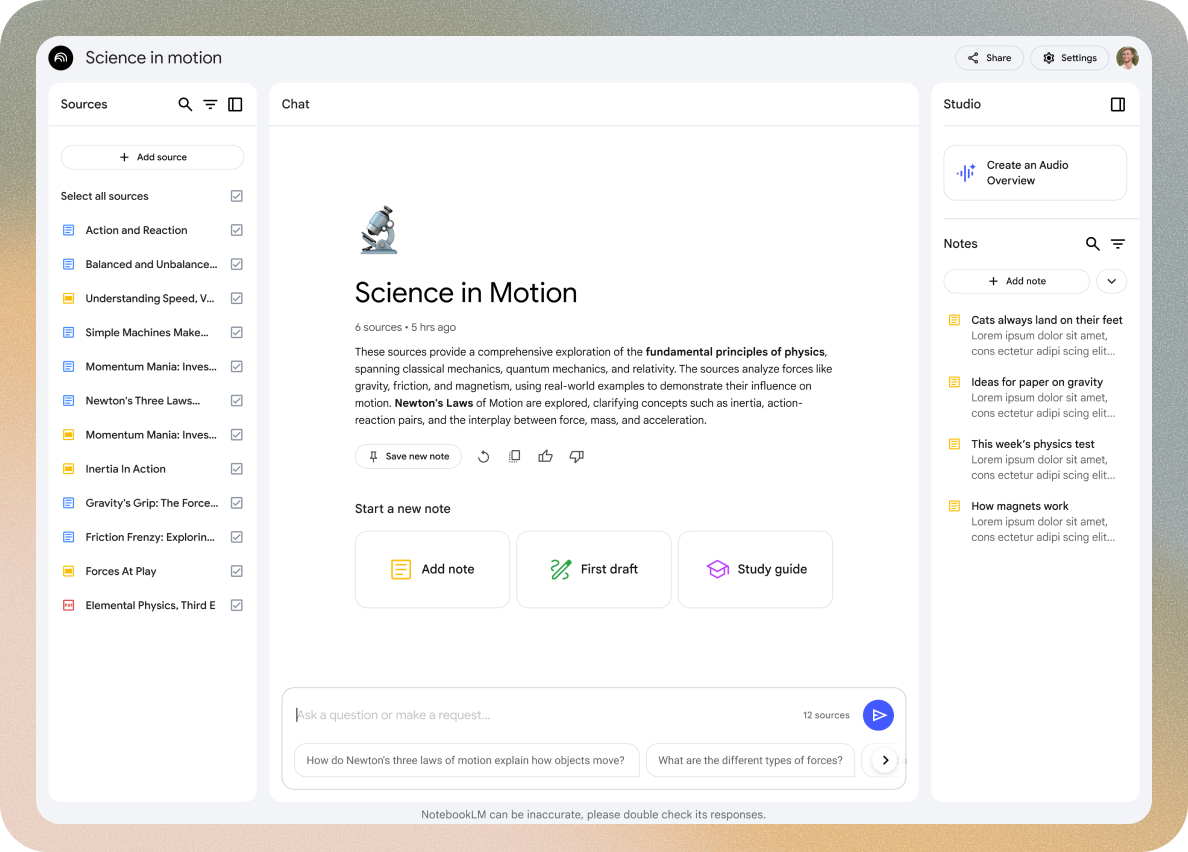
The mental model of NotebookLM was built around the creation journey: starting with inputs, moving through conversation, and ending with outputs. Users bring in their sources (documents, notes, references), then interact with them through chat by asking questions, clarifying, and synthesizing before transforming those insights into structured outputs like notes, study guides, and Audio Overviews.
By grounding the design in this linear but flexible flow (Inputs → Chat → Outputs) we gave users a clear sense of place within the product while keeping the complexity of new AI interactions digestible and intuitive.
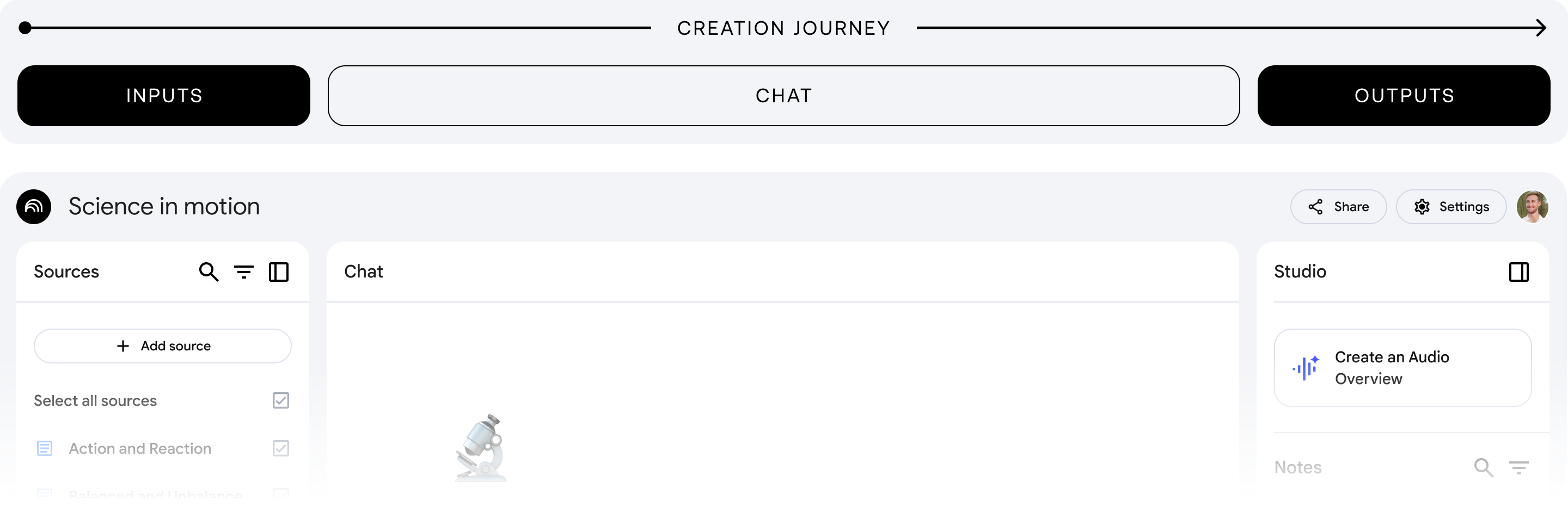
It’s rare to find a product that brings reading, writing, and creation together in a truly integrated way largely because juggling all three can be overwhelming. But with AI reducing friction, the opportunity emerged to design a space where every part of the creative process could coexist.
To make that possible, I designed a responsive panel system that adapts to the user’s needs, scaling fluidly while preserving quick access to key elements like sources and notes, even at the smallest sizes.